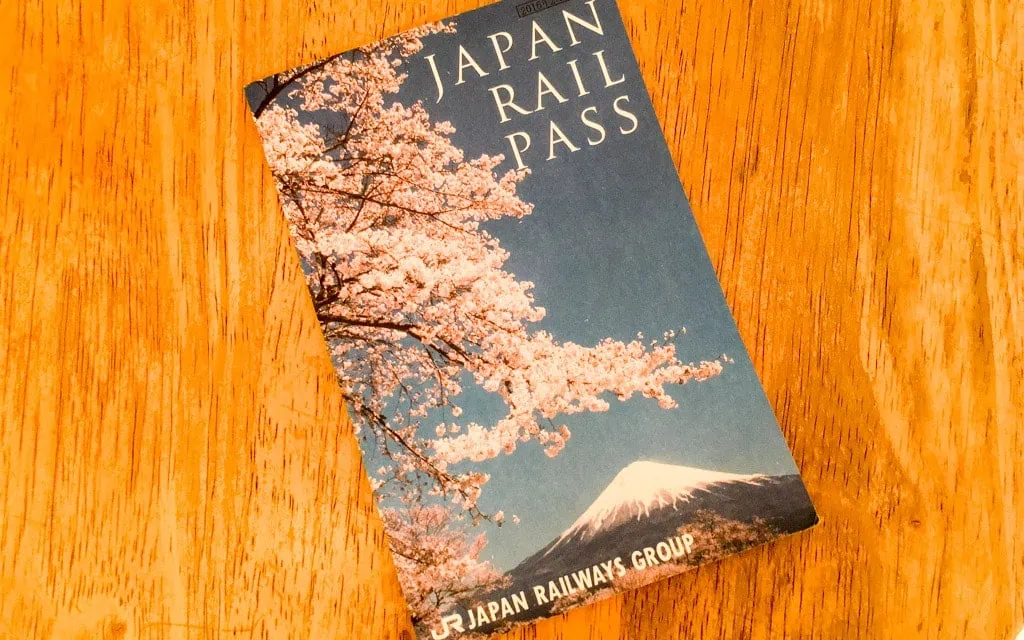
If you are planning to travel to Japan and want to explore the country by train, the Japan Rail Pass (JR Pass) used to be an automatic purchase for almost every traveler.
Today, after a significant price increase, it requires a bit more math to see if it fits your budget. However, for many, it remains the ultimate ticket to freedom.
These train passes, available for 7, 14, or 21 consecutive days, allow you to move around the country effortlessly.
When traveling to a new country and using a new form of transportation, you probably have questions such as:
- What is a Japan Rail Pass?
- Is the pass still worth the cost in 2026?
- How do you purchase a Japan Rail Pass?
- How do you make reservations for JR trains?
- How do you find JR train schedules and timetables?
This guide will help answer these questions.
What is a Japan Rail Pass (JR Rail Pass)?
A Japan Rail Pass, also known as the JR Rail Pass or JR Pass, is a special train pass offered primarily to foreign visitors which allows for unlimited use of most JR (Japan Railways) trains for travel across Japan.
Who is eligible?
The pass is strictly for foreign tourists visiting Japan under the entry status of “Temporary Visitor.”
Note: Japanese nationals living abroad can also purchase the pass, but the rules are very strict. You must be able to prove via official documentation (such as an “Overseas Residential Registration” or “Certificate of Overseas Residence”) that you have resided outside Japan for at least 10 consecutive years.
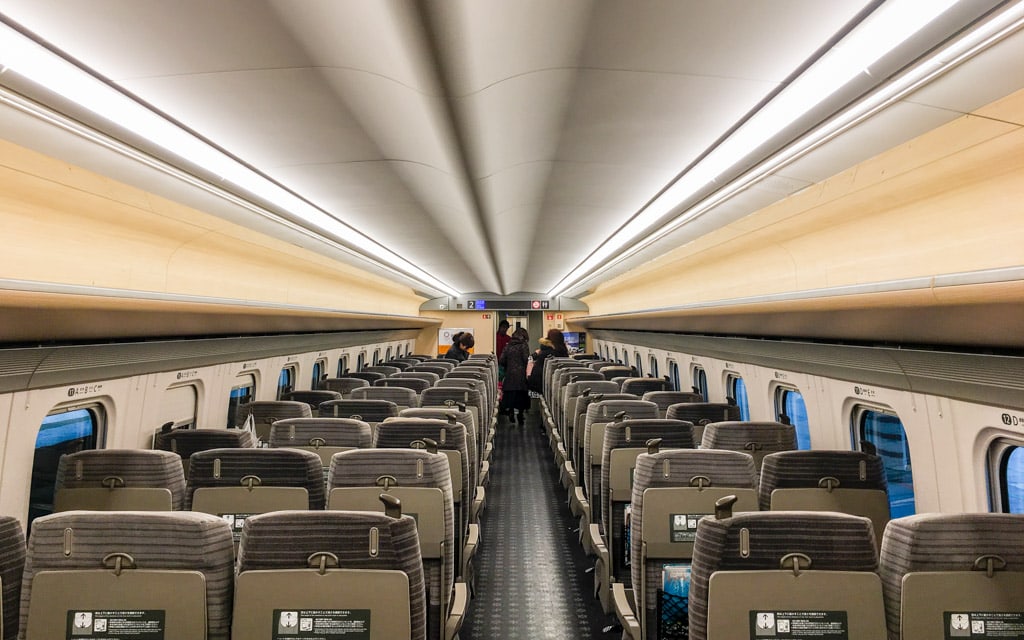
There are two types of passes: Ordinary (Standard Class) and Green Car (First Class).
Green cars have slightly larger seats with more foot room. The cars are usually less crowded as the fares are higher, and these cars are not covered by the Ordinary pass.
In my opinion, there is rarely a reason to spend the extra money on a Green Car pass. The seats inside Ordinary cars are more comfortable than almost any airline seat. They have plenty of legroom, and better yet, they recline.
The Japan Rail Pass is valid on:
- Most nationwide trains operated by JR (Japan Railways) including Shinkansen (bullet trains), limited express trains, express trains, rapid trains, and local trains
- Tokyo Monorail between Haneda Airport and Hamamatsuchō Station
- Narita Express (N’EX) between Narita Airport and Greater Tokyo
- JR Miyajima ferry (near Hiroshima)
- Certain local JR buses
The Japan Rail Pass has restrictions on:
- Nozomi and Mizuho Shinkansen trains: These are the fastest trains. You can now ride them with a pass, but only if you purchase a supplemental “Nozomi/Mizuho Ticket” for each ride. Otherwise, you must stick to the Hikari, Kodama, or Sakura trains (which are nearly as fast).
- Trains that run on non-JR tracks (some subway lines that share tracks).
- “Liner” trains requiring special boarding tickets.
- JR highway buses.
Where to buy a Japan Rail Pass
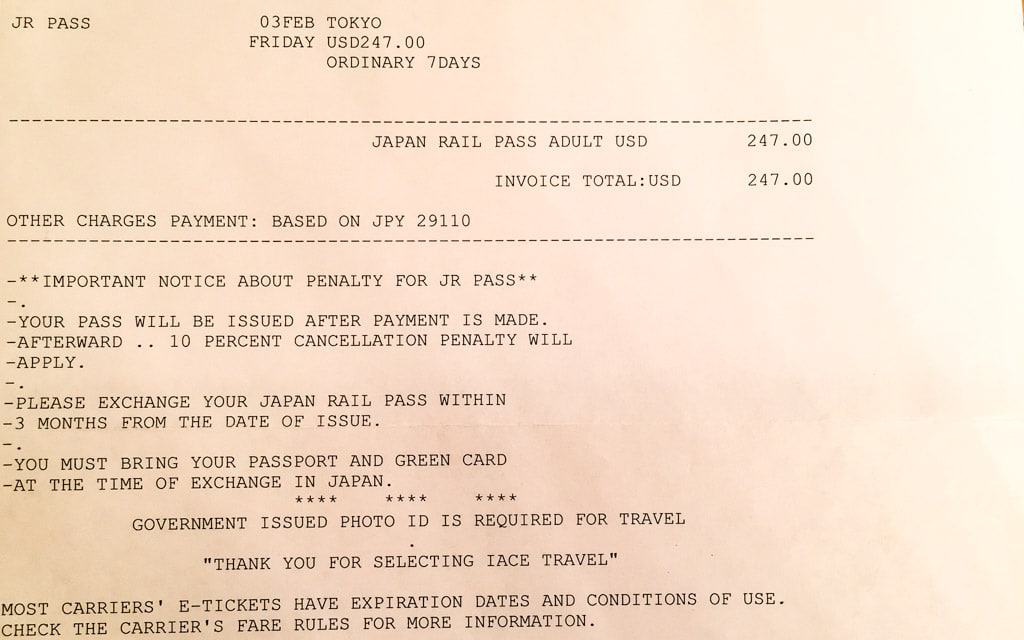
Important: You generally cannot buy the pass at station counters inside Japan anymore. You must purchase it before you arrive or online.
Passes can be purchased using two methods:
- Official Website: Buying directly from the official JR site allows you to book seat reservations online before you even leave home.
- Third-Party Agency: Buying from sites like JRailPass.com or a local travel agent sends you a physical “Exchange Order” voucher by mail. This is often slightly cheaper than the official site, but you cannot book seats online until you arrive in Japan and exchange the voucher.
Current Cost of a Japan Rail Pass (Approximate):
| Duration | Ordinary (Standard Class) | Green Car (First Class) |
|---|---|---|
| 7 consecutive days | 50,000 yen | 70,000 yen |
| 14 consecutive days | 80,000 yen | 110,000 yen |
| 21 consecutive days | 100,000 yen | 140,000 yen |
Exchanging your voucher for your Japan Rail Pass
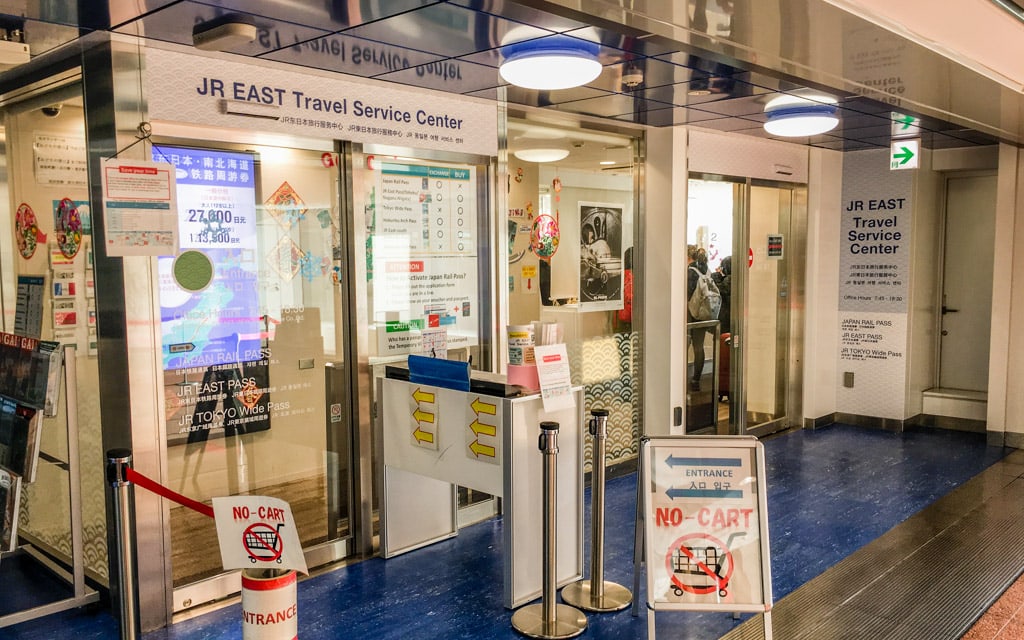
If you purchased through a third-party agency, you received a voucher, not the actual pass.
To get your pass, you must visit a JR Travel Service Center or Ticket Office at major stations (like Tokyo Station) or airports (Narita/Haneda). You will need your passport and the physical voucher.
When you exchange it, you don’t have to start using it that exact day. You can select a start date within the next 30 days.
Note on timing: The pass runs on calendar days, not 24-hour periods. If you activate a 7-day pass at 8:00 PM on a Friday, that Friday counts as Day 1. Your pass will expire the following Thursday at midnight.
Finding Schedules: Goodbye Hyperdia, Hello Navitime
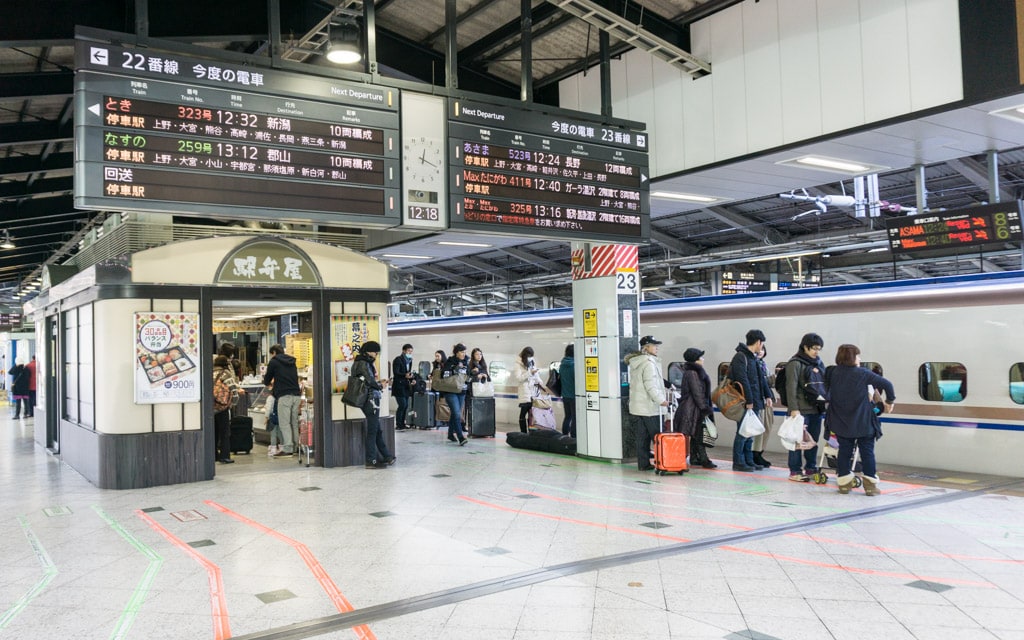
For years, Hyperdia was the go-to tool for Japan travel. However, it no longer offers timetable searches.
Today, your best friends are Google Maps and Japan Travel by NAVITIME.
Using Japan Travel by NAVITIME:
This app is essential for pass holders because it has a “Rail Pass Mode.”
- Download the app.
- Go to settings and select “Japan Rail Pass” under passes.
- Search for a route (e.g., Tokyo to Kyoto).
- The app will automatically filter out the Nozomi and Mizuho trains that usually require an extra fee, showing you only the trains covered by your pass (Hikari, Kodama, etc.).
How to make seat reservations for JR Trains
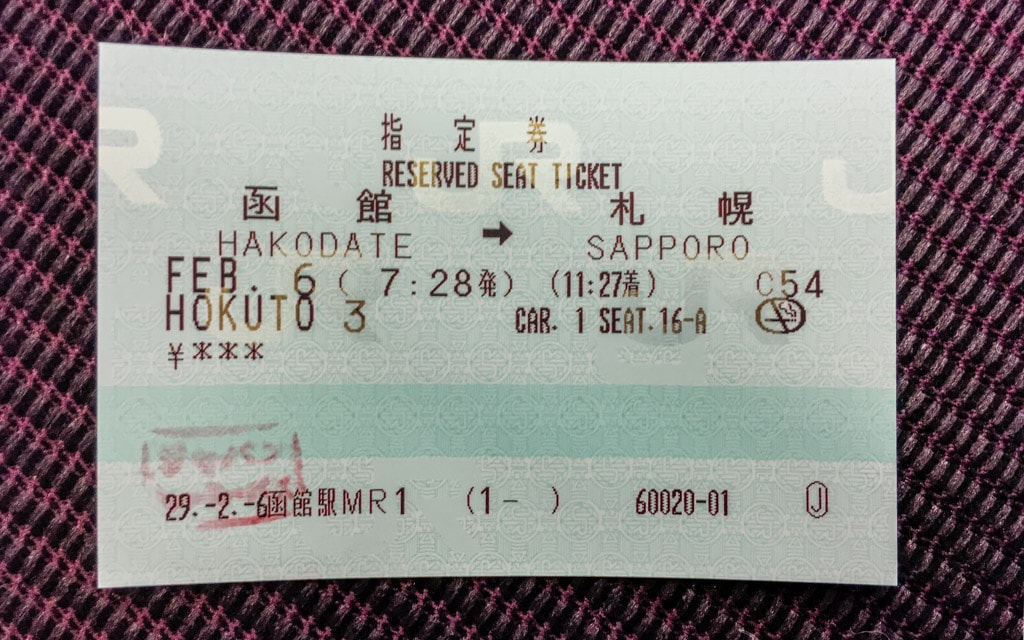
Seat reservations are free for pass holders.
If you bought the pass via the official website:
You can book seats online in advance through the official reservation site. You then pick up your tickets at the station machines.
If you bought a voucher from an agent:
You can book seats at the green ticket machines at train stations or at any “Midori no Madoguchi” (Ticket Office) once you have exchanged your voucher for the physical pass.
Reservations are recommended for long-distance travel, especially during peak seasons (Golden Week, New Year’s, Obon). However, for most of the year, you can usually find space in the non-reserved cars without issues.
Note: Some trains, like the Narita Express and the Hayabusa Shinkansen to Hokkaido, are “All Reserved Seating.” You need a seat reservation before boarding these.
How to use a Japan Rail Pass (Updated)
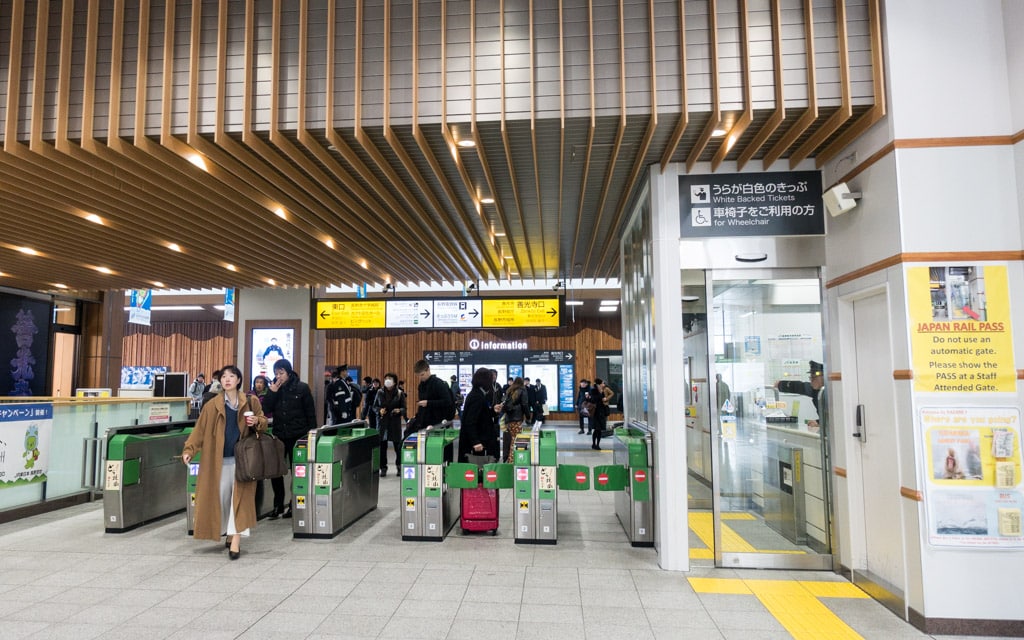
Good news. The days of waiting in line to show your pass to staff are over.
Newer Japan Rail Passes (issued since 2020) look like regular train tickets and have a magnetic back. You can insert your pass directly into the automatic ticket gates.
How to do it:
- Insert your JR Pass into the slot on the ticket gate.
- Walk through the gate.
- Don’t forget to grab your pass as it pops out the other side.
Is purchasing a Japan Rail pass worth it in 2026?
This is the big question.
Important 2026 Update: While the price of the Japan Rail Pass has remained steady recently, individual ticket prices for JR East lines are scheduled to increase by ~7% starting in March 2026.
This makes the pass slightly better value than before, but the math is still tight.
If you are just doing a simple round trip from Tokyo to Kyoto, the pass is likely not worth it.
The Math (Approximate fares):
- Tokyo to Kyoto (One way): ~14,000 yen
- Kyoto to Tokyo (Return): ~14,000 yen
- Total: ~28,000 yen
A 7-day pass costs 50,000 yen. As you can see, a simple round trip does not cover the cost.
However, the pass is worth it if:
- You are traveling long distances (e.g., Tokyo -> Kyoto -> Hiroshima -> Fukuoka -> Tokyo).
- You value flexibility over cost (the ability to hop on any train without buying tickets every time).
- You plan to take many side trips (e.g., Himeji, Miyajima, Nikko, Kamakura) in a short period.
Now add in a day trip from Tokyo to Nagano, and the rail pass will start saving you a lot of money.
Before you buy, I highly recommend using a “JR Pass Calculator” online to plug in your itinerary and see if the pass saves you money.
Last Updated on February 5, 2026

Hello Anthony, thanks for your information. Does every JR station have a JR office? We want to go at our own pace. Can we reserve the seat before we hop on the train at the JR station? Our vacation is in mid-Feb 2019. We plan to visit Tokyo, Gero, Takayama, Kanazawa, Nagano, etc. Thanks!
Jo,
I believe most, if not all JR Stations have ticket offices where you can make seat reservations for JR trains. You can make seat reservations at any time, even right before the train departs. If you know your plans ahead of time, I recommend booking seat reservations early, especially during peak travel months. You can always make changes or cancel the reservation if your plans change. In February, you shouldn’t have any issues. Even if you don’t have a seat reservation, most trains have unreserved seats. I do this once in a while when I am in a rush and most of the time I never have an issue finding a seat. Your plan sounds great. Those are some great cities, just be prepared for cold weather and snow.