
First-time visitors to Japan often ask me, “Which airport in Tokyo should I fly into, Narita or Haneda?“
In 2026, the answer is less about which airport is “better” and more about what fits your trip. Your hotel location, arrival time, luggage situation, and budget matter more than ever. Tokyo is easier to navigate with digital arrival tools, mobile transit payments, and fast airport rail options, but the best choice still depends on where you are staying and how you want to start your trip.
Both airports are world-class, but they serve different needs. Here is a practical, updated guide to choosing between Narita vs. Haneda and getting into Tokyo smoothly.
Narita International Airport (NRT) is farther from central Tokyo and remains a major gateway for international flights. You have multiple ways to reach Tokyo, including the JR Narita Express (N’EX), Keisei Skyliner, other rail options, buses, taxis, and private transfers.
Haneda Airport (HND) is much closer to central Tokyo and is the main airport for domestic flights, while also handling many international routes. Rail options are straightforward (Keikyu Line or Tokyo Monorail), plus airport buses and taxis.
If you are looking for more information about Tokyo and Japan, I highly recommend you pick up a guidebook such as Lonely Planet Best of Tokyo 2020
Before You Fly: The 2026 Checklist
1. Immigration and Customs: Use the QR Code Option
Register on Visit Japan Web before you fly. It lets you pre-register arrival procedures (immigration and customs) online and generate QR codes that can speed up the process on arrival.
Good to know: Paper forms are still available and accepted. Visit Japan Web is optional, but it can make the process faster.
2. Connectivity: eSIM and Pocket WiFi
If your phone supports it, installing an eSIM before your trip can save time and skip rental queues. Popular options include Ubigi, Airalo, and Holafly. Holafly sells “unlimited data” Japan eSIMs, but hotspot sharing is limited on many plans, so check the rules if you need tethering for a laptop or other devices.
Prefer pocket WiFi instead? I still use pocket WiFi on some trips. It is an easy option for connecting multiple devices, and you can pick it up at the airport.
- Easy booking: Ninja WiFi pocket WiFi on Klook (includes a free power bank).
- Sharing: Up to 5 devices.
- Data: “Unlimited” plans typically have a high-speed daily allowance depending on the option. After heavy use, speeds can slow until the next day.
Tip: Pocket WiFi is great for groups, but it is one more device to carry and keep charged.
3. The IC Card Situation (Suica and PASMO)
Physical IC card availability is much better than it was during the chip shortage, but stock can still vary by location and week.
- iPhone and Apple Watch: You can add a regular Suica to Apple Wallet, or use the official Welcome Suica Mobile app (valid for 180 days). Note that app download and top-ups may be restricted by law in some countries until you arrive in Japan.
- Android and physical card users: You can usually buy a standard Suica or PASMO again at major stations and airports, but if machines are sold out, check nearby service counters or try another major station later that day.
4. Late Arrivals: The Last Train Problem
Tokyo trains generally stop running around midnight. If your flight lands late, immigration and baggage claim can push you past the last practical departure.
- Risk window: If you land late (especially close to the last scheduled airport train or bus), do not assume you will make it into the city.
- Advice: If arriving very late, consider staying at an airport hotel, or confirm late-night bus and taxi costs ahead of time.
5. Luggage Forwarding (Takkyubin) Reality Check
Luggage forwarding is fantastic, but same-day delivery is not guaranteed, especially for afternoon arrivals.
- Plan for next-day delivery: Pack a “Day 1” kit (toiletries, chargers, a change of clothes) in your carry-on.
- Always confirm cutoffs: Desk cutoff times vary by counter and by airport.
Additional Resources and Official Links
- Visit Japan Web
- JR East (Narita Express)
- Keisei (Skyliner)
- Narita Airport taxi fixed fares
- Haneda Airport train access
- Airport Bus TYO-NRT
- Welcome Suica Mobile (JR East)
Narita International Airport (NRT)
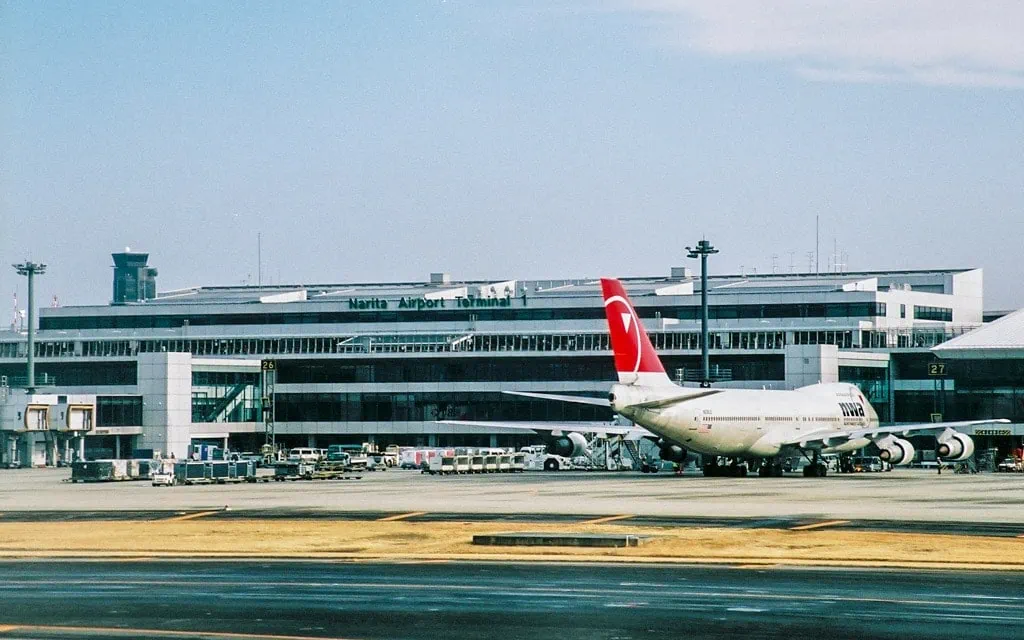
If you are flying into Tokyo from the United States or other long-haul international destinations, you will often land at Narita. The airport is about 37 miles (60 kilometers) east of central Tokyo.
Narita remains one of Japan’s key international gateways, with extensive airline coverage and multiple transport options into Tokyo.
Two companies operate the main airport trains to Tokyo: JR East and Keisei Electric Railway.
Pros of Arriving and Departing at Narita
- Strong selection of international flights and airlines.
- Multiple train and bus choices depending on your destination.
- Direct limited express trains to major Tokyo hubs (Tokyo Station, Shinjuku area, Shibuya area, Yokohama area).
Cons of Arriving and Departing at Narita
- Farther from central Tokyo than Haneda.
- Train and taxi costs are generally higher than from Haneda.
How to Get to Tokyo from Narita by JR East
JR East offers two common approaches from Narita Airport:
- Narita Express (N’EX): Faster, reserved seating, luggage-friendly, direct to major stations.
- Rapid services (Narita Line and Sōbu Line Rapid): Slower but cheaper, fewer “comfort” features.
Narita Express (N’EX)
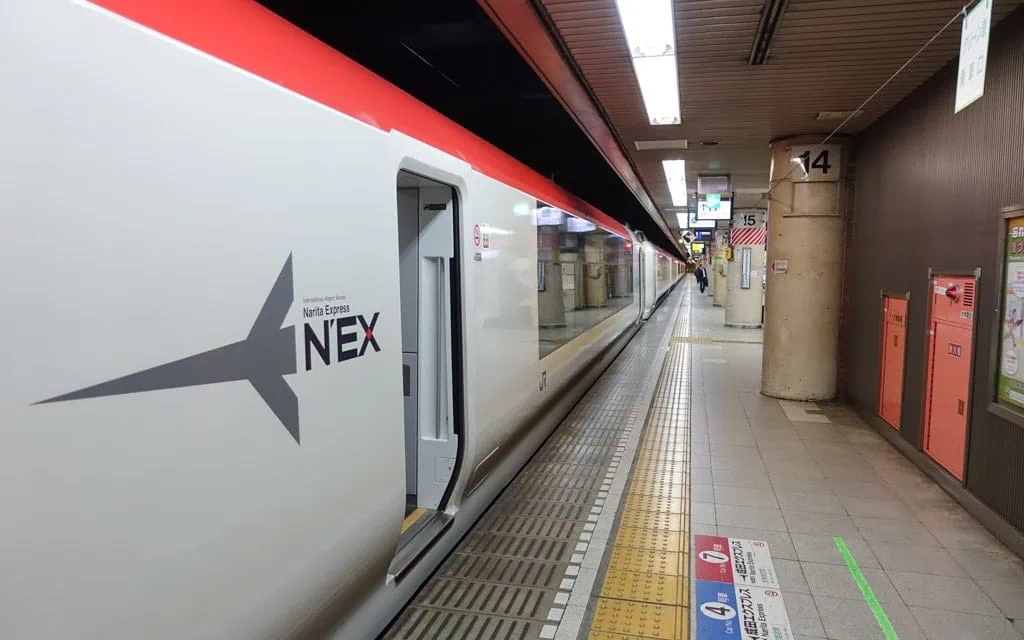
The Narita Express (N’EX) is one of the most comfortable ways to reach Tokyo from Narita. If you are staying in Shinjuku or near Tokyo Station, it is often the simplest option with luggage.
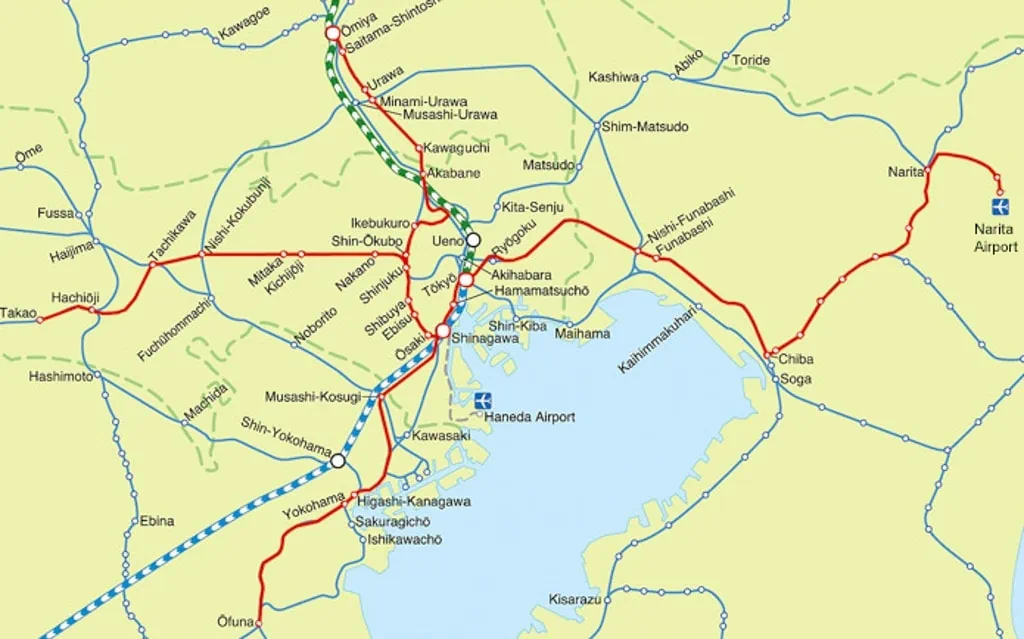
N’EX stops at major stations including Tokyo, Shinagawa, Shibuya, Shinjuku, and Ikebukuro. Some trains continue toward Yokohama and beyond.
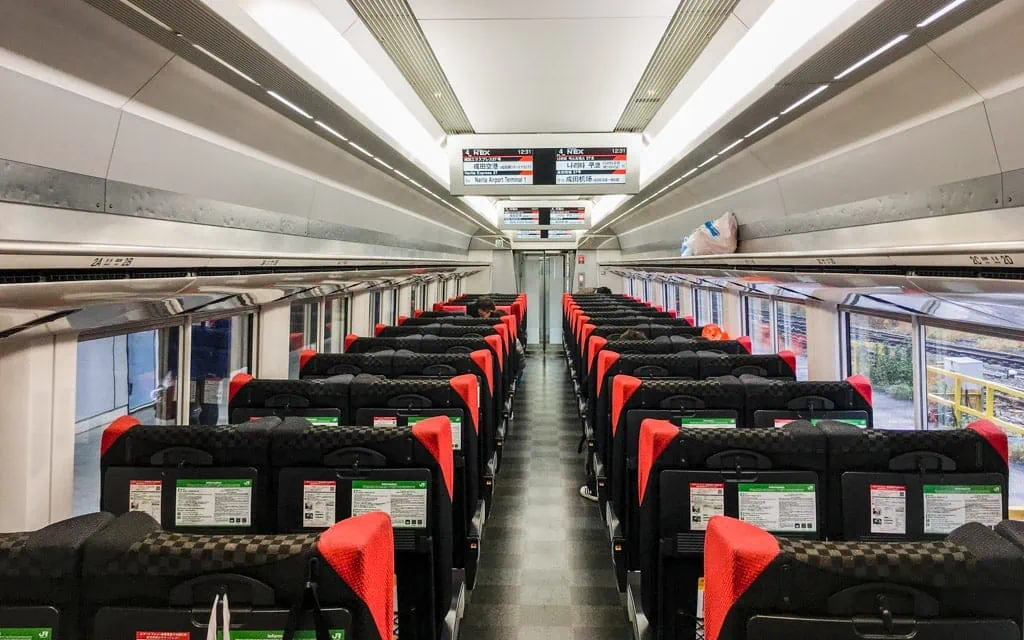
Expect comfortable seats, luggage space, overhead bins, and onboard screens.
Japan Rail Pass note: JR Pass prices increased significantly in October 2023, so many travelers doing only Tokyo plus one other city no longer “break even.” Calculate your expected rail spend before buying a pass.
If you still want a pass, you can purchase through JRailPass.com.
Typical one-way N’EX fares (ordinary reserved seat) from Narita Airport:
| Destination | Typical Travel Time | Typical One-Way Fare |
|---|---|---|
| Tokyo Station | About 60 min | 3,070 yen |
| Shinagawa, Shibuya, Shinjuku area | About 70 to 90 min | About 3,250 yen |
| Yokohama Station | About 90 min | About 4,370 yen |
N’EX Tokyo Round Trip Ticket
If your flights arrive and depart from Narita, the N’EX Tokyo Round Trip Ticket can save money compared to buying two one-way tickets.
- Adult: 5,000 yen
- Child (6 to 11): 2,500 yen
- Valid: 14 days from first use
- Seats: Reserved seats in ordinary cars
Official details: JR East N’EX page.
Important notes:
- Not every N’EX train stops at every major station. Confirm your train on the official schedule or a reliable route planner.
- For platform numbers and real-time updates, Google Maps and the Navitime app are both commonly used.
JR Narita Line and JR Sōbu Line Rapid (Budget Option)
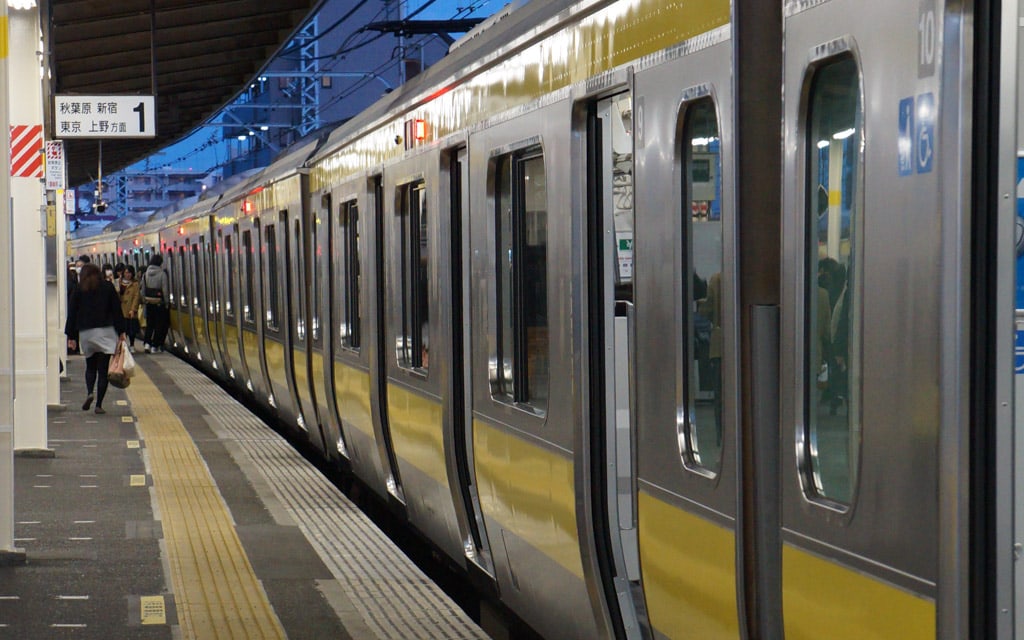
If you want to save money, you can use rapid services that connect through Chiba and continue toward Tokyo. It is slower than N’EX but costs much less.
- Typical travel time: about 90 minutes to Tokyo Station
- Typical fare: around the low 1,000 yen range (varies by route and ticket type)
- Frequency: commonly about once per hour
Tip: Use a route planner for your exact time and destination. Rapid services can be great, but they are less “airport traveler focused” than N’EX.
How to Get to Tokyo from Narita by Keisei Electric Railway
Keisei operates three common rail options from Narita:
- Skyliner: fastest limited express to Nippori and Keisei-Ueno (reserved seats).
- Access Express: direct services to parts of eastern Tokyo and sometimes through-services, but slower than Skyliner.
- Main Line Limited Express: slowest, cheapest, more stops, and often requires transfers for many destinations.
Keisei Skyliner
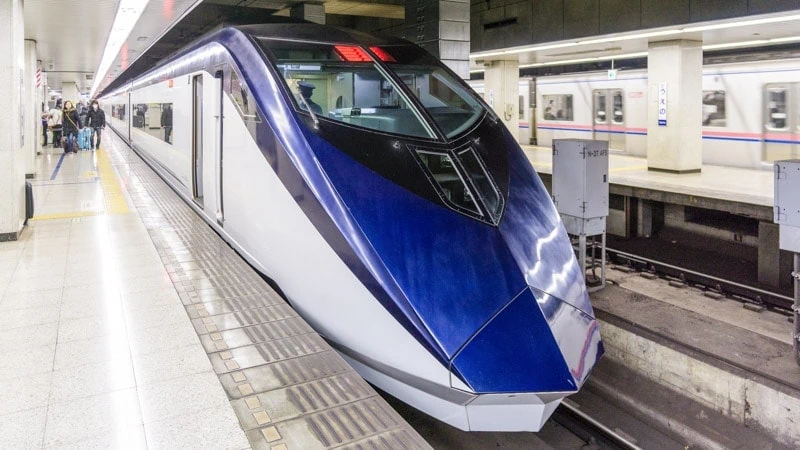
The Keisei Skyliner is one of the fastest ways into Tokyo from Narita. It connects Narita Airport to Nippori and Keisei-Ueno.

Typical travel times: about 40 minutes to Nippori, about 45 minutes to Keisei-Ueno. Trains commonly run multiple times per hour.
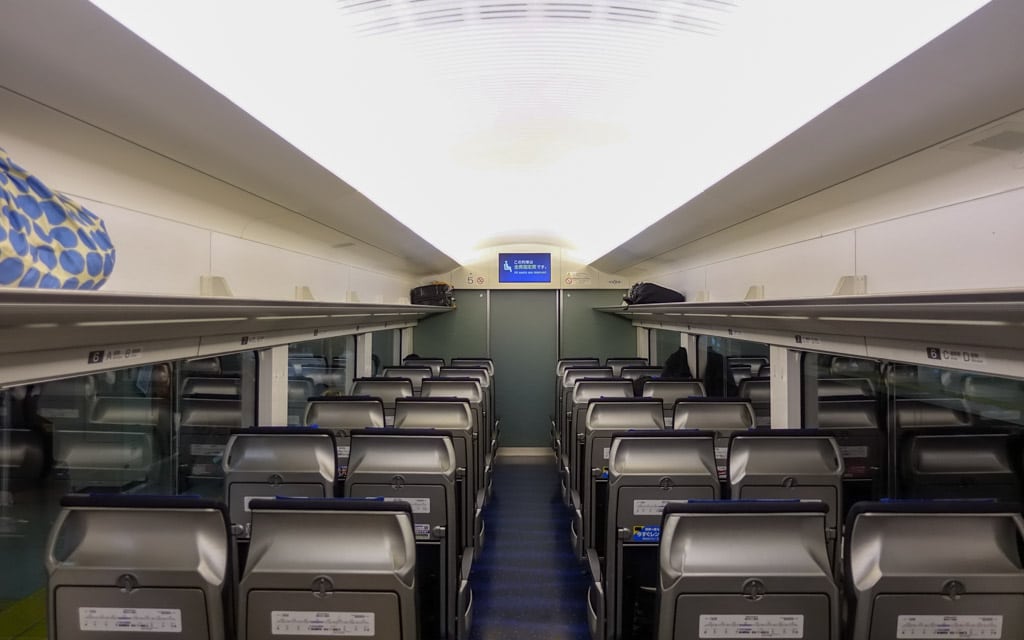
One-way Skyliner fares:
- Adults: 2,580 yen (2,310 yen when purchased online)
- Children: 1,290 yen (1,150 yen when purchased online)
Round-trip Skyliner fares:
- Adults: 5,160 yen (4,500 yen when purchased online)
- Children: 2,580 yen (2,240 yen when purchased online)
Official discount tickets and current pricing: Keisei Skyliner e-ticket page.
The full Keisei Skyliner timetable: View the timetable here.
Keisei Narita Sky Access Line (Access Express)
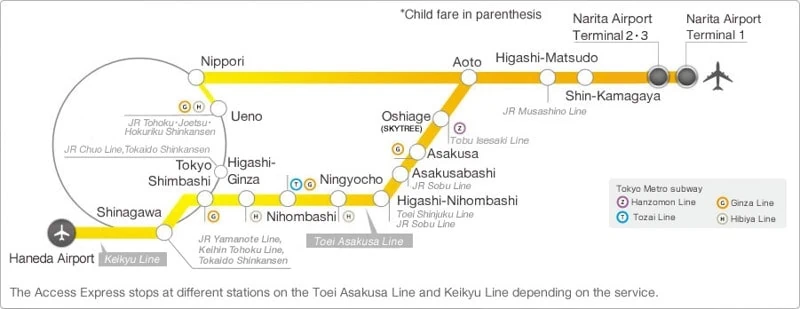
The Access Express is slower than the Skyliner but can be convenient for certain destinations, including parts of eastern Tokyo and through-services depending on the train. Always confirm your specific train’s destination and stopping pattern.
Fares vary by destination, so the most reliable approach is to check the official route and fare tools before you travel: Keisei official site.
Keisei Main Line (Limited Express)
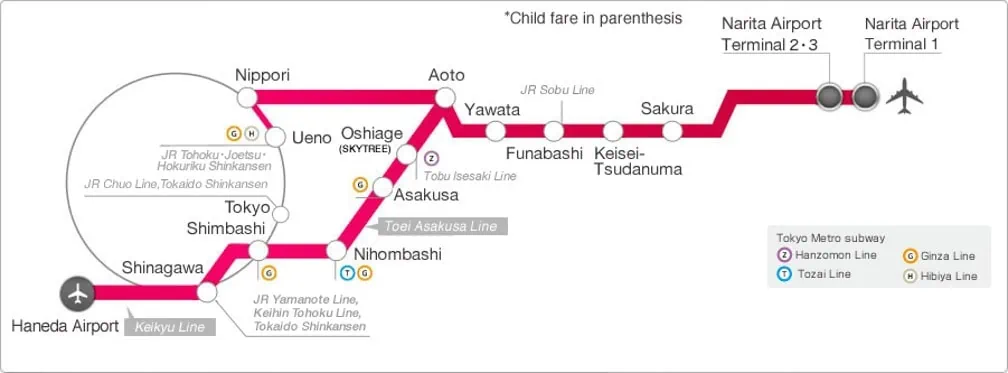
The Keisei Main Line Limited Express is the slowest and typically the cheapest rail option from Narita. It makes more stops and often requires transfers depending on where you are going.
How to Get to Tokyo from Narita by Bus
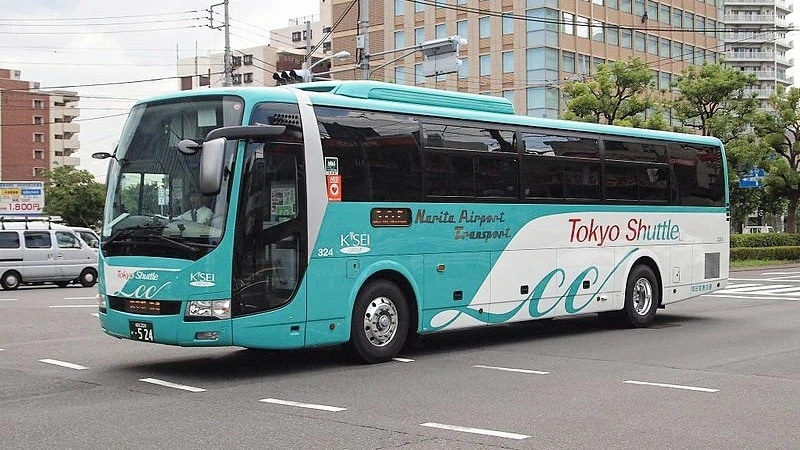
Bus options range from premium limousine buses to the popular low-cost option:
- AIRPORT BUS TYO-NRT: 1,500 yen one-way (late-night and early-morning services cost more). Official fares: TYO-NRT fare page.
- Other bus routes: Use the official Narita Airport bus page to find your exact destination, timetable, and fare.
Buses departing from Narita leave from the bus lanes on the first floor of each terminal.
How to Get to Tokyo from Narita by Taxi

Taking a taxi from Narita to Tokyo is convenient but expensive.
Fixed-fare taxis to Tokyo typically fall in the 21,500 to 35,500 yen range plus highway tolls, depending on your destination zone and route. Late-night surcharges may apply.
Tip: For the latest fixed-fare details (including late-night notes and route differences), check the official Narita Airport taxi page.
Haneda Airport (HND)

Haneda Airport is much closer to central Tokyo, roughly 8 miles (14 kilometers) south of Tokyo Station. It is the primary airport for domestic flights and also handles many international routes.
- Terminal 3: The main international terminal for many airlines.
- Terminal 2: ANA operates many international flights from Terminal 2.
Always check your ticket and your airline’s terminal guidance before you travel to the airport.
Helpful links:
Haneda official terminal info,
ANA Haneda airport guide.
Haneda Airport Garden (Onsen and Hotel)
Connected to Terminal 3, Haneda Airport Garden includes Hotel Villa Fontaine, shops, and Izumi Tenku no Yu, an onsen facility. Official facility information: Izumi Tenku no Yu site.
Pros of Arriving and Departing at Haneda
- Much closer to central Tokyo than Narita.
- Cheaper and faster ground transport for most Tokyo neighborhoods.
Cons of Arriving and Departing at Haneda
- Some international routings may be limited compared to Narita depending on your origin.
- Rail routes are easy, but you often transfer once to reach your final neighborhood.
- Very busy airport, especially at peak hours.
How to Get to Tokyo from Haneda by Keikyu Line
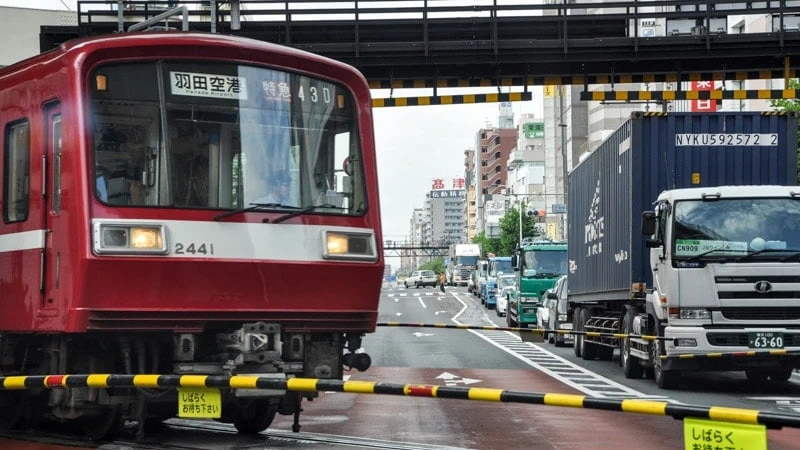
The Keikyu Line is a fast, inexpensive way to reach Shinagawa, and from there you can connect to JR lines (including the Yamanote Line). Some services also through-run onto the Toei Asakusa Line, which can be handy depending on where you are staying.
If you used an IC card, you usually just tap through at transfers. If you used a paper ticket, follow the signs for transfer gates and insert your ticket where required so the fare is handled correctly.
Typical fare: about 330 yen (about 327 yen with an IC card) from Haneda to Shinagawa, depending on terminal and exact service.
How to Get to Tokyo from Haneda by Tokyo Monorail

The Tokyo Monorail connects Haneda to Hamamatsuchō, where you can transfer to JR lines. It is simple and frequent.
Typical fare to Hamamatsuchō: about 520 yen (about 519 yen with an IC card).
Airport Bus Options from Haneda

Airport buses are great if you want fewer transfers and more luggage space. Routes vary by time of day and can change seasonally.
For the most reliable schedules and routes, start here: Haneda official bus access page.
How to Get from Haneda to Tokyo by Taxi

A taxi can be worth it for late-night arrivals, heavy luggage, or groups splitting the fare.
- Haneda offers flat-rate taxi options for many Tokyo areas.
- Late-night premiums can apply, and expressway tolls are typically extra.
For the latest flat-rate fare tables by area, use this official access guide: Haneda Taxi (access guide).
Summary: Tokyo Airport Transportation Comparison
Use this quick chart to match the airport and transport to your travel style.
| Route | Transport Mode | Typical Time | Typical Cost | Best For |
|---|---|---|---|---|
| Narita (NRT) | Skyliner | About 40 min (to Nippori) | ¥2,580 (¥2,310 online) | Speed. Fastest route to Ueno or Nippori connections. |
| Narita Express (N’EX) | About 60 min (to Tokyo Station) | ¥3,070 (round trip ¥5,000) | Comfort. Luggage-friendly, direct to major hubs. | |
| AIRPORT BUS TYO-NRT | About 65 min | ¥1,500 (¥3,000 late-night) | Budget. Simple ride to Tokyo Station (Yaesu side). | |
| Haneda (HND) | Keikyu Line | About 15 to 25 min (to Shinagawa) | About ¥330 | Value. Cheap and fast, easy transfers to JR. |
| Tokyo Monorail | About 13 to 20 min (to Hamamatsucho) | ¥520 (¥519 with IC) | Convenience. Frequent service and easy JR connections. | |
| Taxi | About 30 to 45 min | Varies (often ¥6,000+ before tolls and late-night premium) | Groups and ease. Door-to-door or late-night arrivals. |
Last Updated on January 13, 2026

Thanks for this very detailed and useful post!
Is the monorail included on the Japan Rail pass?
Elliott,
Yes. The monorail is covered by the JR Rail Pass.
Do you have information for transportation during the 2019 Rugby World Cup?
Elizabeth,
Transportation options should be business as usual. You can find timetables, ticket prices, and detailed information by visiting http://www.hyperdia.com/en/
Hi Anthony, this is a great post, but unless I missed the answer it seems you haven’t stated a preference for either airport.
For a first time visitor looking to stay in Yokohama for the Rugby World Cup, which would you err towards?
Also do you think it will still be viable to use the rail pass during the tournament as I assume the trains will be very busy, so booking the bullet train could be risky, unless you can book them all in one visit to the booking office at the first train station?
Sorry for asking so much, but yours is the first post with useful information on I’ve found 🙂
Rich,
I always recommend Haneda Airport whether you are staying in Tokyo or Yokohama. It is much closer to Tokyo and very close to Yokohama. It might be more busy but I think you should be fine with seats for the bullet train even during the Rugby World Cup. If you know your plans ahead of time, you can book seat reservations in advance to be safe. Otherwise, just book a day or two before. Also remember, most trains have unreserved seats, and if those are full, you could stand. If you book a seat reservation and you don’t need it, you can always go back to the station and cancel it.
Anthony,
Thanks for this detailed post. My son and I will be traveling through Japan in Feb and I’m considering getting a flight with a longer layover so we can explore Tokyo for a day. He has a US passport I don’t but I have a green card do you know if I can get my Visa there or do I need to get it here in LA? I’m also a foodie what would you recommend for us to go to to eat some delicious sushi, ramen and steak? Thank you so much for your time!
Raymond,
Most tourists to Japan do not require a visa. Which country do you have a passport for? As for food, I recommend visiting Shinjuku and Shibuya. You will find an endless amount of sushi, ramen, and steak restaurants.
Hi Anthony. I have booked a flight to Haneda from Lomdon in February 2019. My husband and I are vegetarians & do not eat fish but can eat eggs
We want to visit interesting places during our 2 week stay.
Will there be a problem getting vegetarian food without fish?
Also are there Indian restaurants?
Thanks
Kay,
While I do not have much knowledge with vegetarian and Indian restaurants in Japan, I do not believe it will be an issue. I would just use Yelp and TripAdvisor to find restaurants and I bet you will be surprised at the number of options.
Anthony
Thank you for such an informative site.
We are flying from London and cruising from Yokohama. Which route would you recommend? I see that the majority of international flights arrive in Narita.
Ruth,
I would book a flight into whichever airport is cheaper. While Haneda Airport is closer to Yokohama, it is easy to get to Yokohama from either airport.
Hello Anthony. You mention JR. I had believed you can only travel JR if you buy passes in your own country. ie Japan residents cannot use JR line. Is this true?
Rhonda,
There might be a few exceptions, but as I understand, Japanese residents are not allowed to purchase most JR Rail Passes. Foreigners can buy some passes in Japan (such as the 7 or 14 day JR Rail Pass), online, or through a travel agent/agency in their home country. Anyone can use any JR Line with a valid ticket or pass.
Hi Anthony,
Great post. Lots of useful information. I have a 7 hour layover in Heneda. Any recommendations on getting to see something in a short amount of time.
Thanks,
Craig
Craig,
Sorry for the late reply. Everything in Japan seems to run smoothly including trains, airport security, and customs, so with 7 hours you could head into the city for a few hours. What to see is a tough question.
You could take the Tokyo Monorail or Keikyu-Kuko Line to Zojoji Temple. Takes about 30 minutes by train then another 10 minutes on foot. You could explore the temple then wander the area until you find a local izakaya or restaurant that looks good. If you have more time you could explore the Kyu Shiba Rikyu Garden near Hamamatsuchō Station.
Enjoy your short visit to Tokyo.
We are cruising into Tokyo in September. We are looking to book our flight back to Orlando, FL.
Any suggestions on the airport? And getting from the ship to the airport?
Sandra,
Haneda Airport (HND) is closer to the Tokyo Cruise Port. With that said, getting to Narita Airport (NRT) isn’t too difficult to reach, just might take a little longer by Narita Express from Tokyo Station. I would just book whichever airport is more convenient for you (price, connections). Narita Airport is usually cheaper with more connections back to the states.
Anthony, Thank you for the thoughtful, insightful, and detailed article. I’m planning on going to Tokyo for the Olympics and this information is very helpful in my planning. Much appreciated!
Hi Anthony, great info, thanks for all of it. On Nov 2, I arrive at Narita at 8pm and Nov 6, leave Haneda at 8am. I plan (?) to get a hotel near relevant airport upon arriving and for departing. Have never been to Japan before. Want to experience Bullet Train, see Mt. Fuji, and sightsee Tokyo. Logistically, is it best to stay near Narita or Haneda for the 3 days/2 nites in between?
Butch,
I would stay either neither Tokyo Station or Shinjuku Station. Those two stations will give you the best connections to other parts of Japan. Also, I believe the bullet train stops only at a few stations in Tokyo. I believe Tokyo Station, Ueno Station, and Shinagawa Station.
Anthony,
What is the cheapest accommodation in Tokyo? I am planning to stay a few days in November of this year. thank you
Hang,
While it depends on what you consider cheap, I find that you can usually find affordable Airbnb properties around Shinjuku Station.
“But keep in mind that using your JR Pass on the Narita Express will use up one of your pass days, so ensure that you plan your journey correctly.”
Could you explain this? I was under the assumption that if I purchased something like a 14 day pass, I had unlimited rail rides during the 14 days. Is this not the case?
Thanks!
Kim,
You are correct. I guess I could have written it more clearly. What I was trying to say was that if you activate your JR Rail Pass on day 1 for only the Narita Express and then stay 3-4 days in Tokyo, then you might not be getting your money’s worth with the pass. For some, it pays off to pay out of pocket for the ride from Narita to Tokyo, stay a few days, then activate your pass for the remainder of the trip. Of course, it will depend on your plans, how long you are staying in Japan, and which pass you get.
Hiya, thanks for all the great info so far. Planning a trip with my daughter(21) in August 2020, it was for Olympics but its more now for shopping. We are going to stay in Shibuya for about a week, flying into Haneda airport if poss. What’s the best way to get to Shibuya, and what do you recommend we do and where to eat… Thanks
Heather,
To reach Shibuya from Haneda Airport, I recommend you check out http://www.hyperdia.com/. It will show you many options and prices. As for food, Shibuya seems to have an endless amount of restaurants on every corner. You could always just walk around and see what looks good. If you like affordable sushi in a laid back environment, I recommend Genki Sushi or Uoebi Sushi.
Hi Anthony,
Great informational post! I will be traveling to tokyo for 2020 summer olympics and this definitely helps. Just to confirm if i buy a rail pass for me and my son and we arrive in narita airport. If we are staying about 7 days and i choose buy 2 one way tickets and take the narita express to tokyo instead of activating our passes does this mean on our last day i can use the jr rail passes for our one trip from tokyo to narita airport but nothing else correct?
Travis,
The day you activate your pass will be day 1. So if you activate your 7 day pass on Monday, the pass will be valid until Sunday. If you travel back to Narita Airport within this period, you will be able to use your pass for the journey.
Hello Anthony! My fiancé and I would like to honeymoon to Japan in early November. It would be our first visit and any suggestions you have for an affordable magical trip would be much appreciated! Cheers, S
Sanaya,
Congratulations! November is my favorite time to visit Japan. For your first time I recommend Tokyo, Kyoto, and Osaka with side trips if you have more time. You should also be able to view some of the fall colors which is spectacular. Enjoy your trip!
Hi Anthony,
Good to read about your familiasing of Tokyo. Me and my wife plan to go Tokyo on free and easy. If go, this is our first visit to Japan. If we choose to stay a hotel near to those shopping centre (in Tokyo), which hotels do you suggest, our budget is about Singapore Dollars 250 per nite.
Is that we must book a train or bus pass in advance ? Can we buy the ticket at the site ? What happened if we miss the schedule , are we allowed to take the next available transport ? Do they announce in English ? Both of us are above 65 years old. Thanks.
Willy,
Sorry for the late reply.
I would recommend staying near Shinjuku Station. Surrounding the station are many restaurants, shopping malls, and tourist attractions. When you think of Tokyo at night, it’s Shinjuku. While I usually stay at Airbnbs, a few top rated hotels in the Shinjuku area include Hundred Stay Tokyo Shinjuku, Citadines Shinjuku Tokyo, Tokyu Stay Shinjuku. I would recommend using Google or Trip Advisor and researching hotels in the Shinjuku area and find what meets your needs.
If you are planning to travel around Japan by rail, I highly recommend you purchase a rail pass. There are many types of rail passes, but the most popular are the 7, 14, and 21 day nationwide passes. These passes can be purchased overseas or in Japan for an additional charge. Once you have your rail pass, you can use it to reserve seats on many trains including the shinkansen (bullet train). If you miss your train, you can just take the next train. If you reserved a seat and missed your train, be sure to cancel the seat reservation by visiting a ticket office located inside every train station.
Hi Anthony , we r traveling to Tokyo January 2020 arriving at Haneda Airport late evening, this is our first visit in Japan , we r there for 7 days then flying to Singapore from Osaka . Which area should we stay so we can explore Tokyo for s few days and r still able to travel to Kyoto and Osaka ?
Tess,
For traveling to Kyoto and Osaka by shinkansen, your easiest option would be to stay near Tokyo Station.
With that said, I would recommend you stay around Shinjuku Station. It is one of the more popular areas of Tokyo and has a lot of sights to see, restaurants, and great nightlife. While the shinkansen does not stop at Shinjuku Station, it’s just a quick train ride to Shinagawa Station where you can board the bullet train on to Kyoto and Osaka.
Does Air Canada fly into Haneda Airport?
Ralph,
Air Canada operates a non-stop flight from Toronto–Pearson to Hanenda Airport (Air Canada AC 1).
Any recommendations for Hotels in the city center-4 star? WE have two days to visit before a cruise and want to make the most of our time. We may plan to visit Disney, but heard Shiyuba & Harajuku are a must….any other must-do’s with only two days? Will it be easier to just take taxi’s?
Very good read! My 0.01 cents… If I have a choice of flying to either (and most of the time there is with major US airlines and their partners, either ANA or Air Japan) and am heading to central Tokyo while traveling light, I would personally pick Haneda as it is so much closer to the city. While it’s true that Monorail does require a transfer, if I am staying east of main Tokyo station around Ginza or Kyobashi (and I usually do stay in this area instead of Shinjuku or Shibuya) technically there’s the Keikyu line that directly takes me there from Haneda without needing to transfer.
Hi Anthony,
I’m planning my first visit to Tokyo with a 4year old kid. Will arrive at Haneda Airport around 4pm local time. I’m thinking to stay 2 nights at Mount Fuji then head straight Shinjuku area after that for another 5 nights stay. Would you recommend this approach and the feasibility?
Hi Anthony,
Love your post! I’m taking my 19 year old daughter to Tokyo for the first time end of this month. We will be staying 4 days. Do you recommend I get the 7 days JR Pass? We will be arriving at Narita International Airport. Also, can you explain better how the JR Pass like once it’s activated, it doesn’t matter how I use it as long as it’s within 7 days of activation? For example, if I used it on the express train to Tokyo from Narita Airport, you said that will use up one whole day of rides, so can I use day 2 on day 1? I hope I’m making sense. Is Tokyo in general a pretty safe city? Does it matter where our AirBnb is located? What I’m asking is are there bad areas in Tokyo? My daughter is really into Anime and Cosplay, where do you recommend we go for shopping that is not too expensive. She really likes anime figurines too. Thanks in advance for your help.
Great posts Anthony, but the answer to your question is that Haneda is the most convenient option by far. It is smaller, closer to the city and has the same bus and rail links as Narita. I am a 6 year resident of Tokyo and always choose HND where possible, though everyone will have no problem with either airport, but HND is cheaper! If you want to see a different side of Japan whilst in Tokyo, try Kamakura, lots of temples and the ocean and easy to get to by Japans wonderful subway train system
Rev,
I love Kamakura! I can’t wait to come back to Japan, hopefully in 2022. I agree that HND is much easier and centrally located. But, for those who have a JR Rail Pass and are heading to Shinjuku, like often in my case, sometimes its not too bad to hop on the Narita Express and be there in an hour. I guess it depends on where in the city you are staying and if you have a pass. Otherwise, HND is easier for sure.